[ad_1]
8.8
Hisense U8K collection (2023)
Like
Comparatively reasonably priced
Wonderful general picture high quality
Succesful Google TV system
Presents a 55-inch display measurement
Don’t love
Not fairly as shiny or dynamic as some rivals
“Theater” image modes have interaction movement smoothing by default
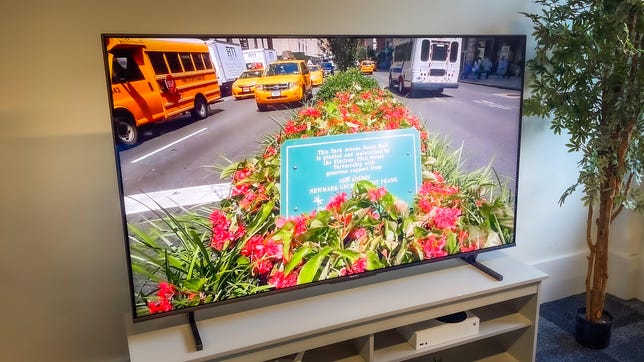
This yr the competitors amongst midpriced TVs is hotter than ever, and one of many best TVs I’ve examined is the Hisense U8K. This tv provides glorious picture high quality for the worth due to super-bright mini-LED technology. The model title is not as well-known as Samsung or Sony, however neither of these manufacturers has a TV with mini-LED at wherever close to the worth.
The principle competitors for the Hisense U8K is the TCL QM8 series. Each are at present obtainable for across the identical value, each have negligible model cachet, each use the Google TV good system and each provide mini-LED with spectacular footage. I compared them side by side in the TV lab at CNET and I am assured both one would make an image high quality snob (like me) completely happy.
The Hisense has one medium-sized benefit: a 55-inch display possibility. The smallest TCL QM8, in the meantime, is 65 inches. So if 65 is just too massive to your room, your finances or your tastes, the selection between the 2 is easy: get the 55-inch Hisense UK8. Or chunk the bullet and get a bigger TV.
In the event you do desire a 65-inch or bigger TV I would suggest the TCL by a hair, assuming their costs are shut. Its image regarded brighter and extra spectacular general than the Hisense, though the TCL wasn’t with out flaws. That mentioned, if that value hole grows rather a lot larger, I would not blame you for saving the cash and going with the U8K. It is a superb TV and also you’d need to step manner as much as an OLED TV to get a big increase in picture high quality.
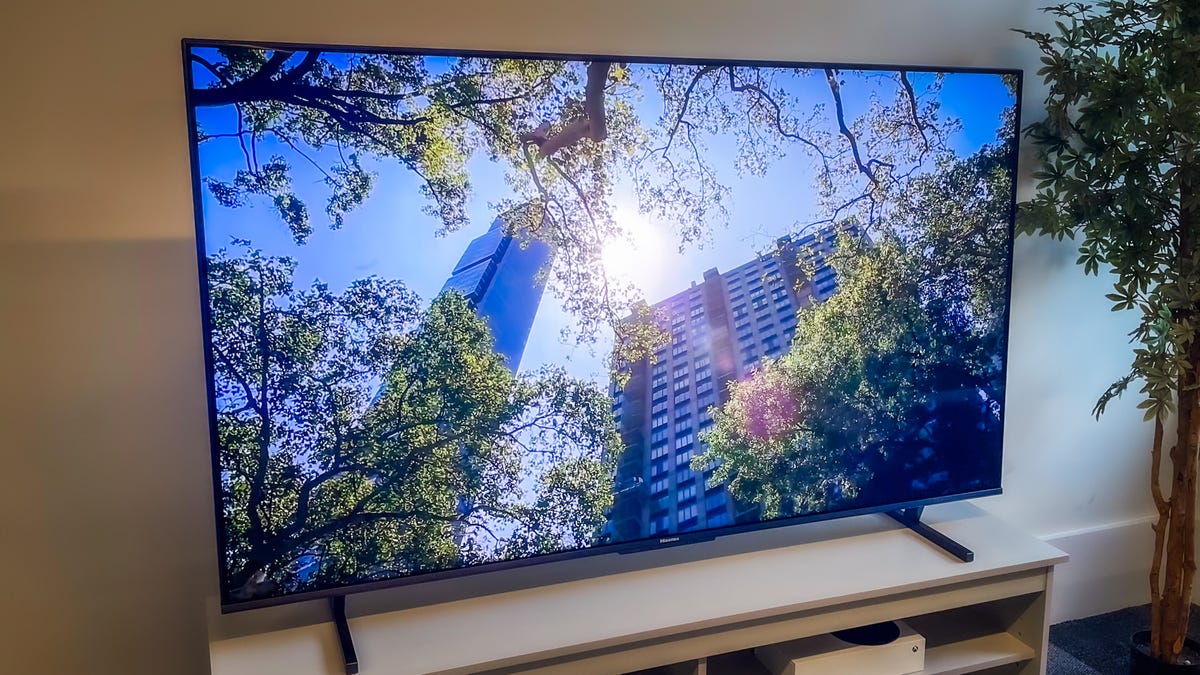
Hisense U8K collection TV sizes
I carried out a hands-on analysis of the 65-inch Hisense U8K, however this assessment additionally applies to the opposite display sizes within the collection. All sizes have comparable specs and will present comparable image high quality. The exception is the 75-inch measurement, which makes use of a distinct panel sort (ADS), which may result in worse black-level efficiency than VA panels used on the opposite sizes. I can not say for certain nonetheless since I did not check that measurement.
The U8K sits close to the highest of Hisense’s 2023 TVs lineup. The corporate does make more-expensive fashions – a souped-up 85-inch ULED X that costs $3,800 and ultrashort throw laser projectors (“Laser TV” in line with Hisense) that start at $5,000 for 100 inches – however the U8K is the mannequin most TV buyers will probably be . The corporate’s less-expensive U7K and U6K TV collection additionally provide mini-LED backlights however have fewer native dimming zones and are not as shiny because the U8K. I have never reviewed them however based mostly on their specs I anticipate their picture high quality will probably be worse than that of the U8K.
And should you occur to be out there for a 100(ish)-inch TV, it is value noting that the 98-inch TCL QM8 prices greater than $10,000 on the time of this writing whereas the 100-inch Hisense U8K prices lower than half as a lot. Benefit: Hisense.

Hisense U8K design and distant: Fundamental, and that is advantageous
The Hisense U8K is a humdrum-looking TV, and that is OK in my guide. It is supported by a pair of squared-off legs to both aspect beneath the primary panel. It is also fairly heavy, as befits a mannequin with such a posh backlight.
The usual black, rubber-buttoned clicker sports activities two completely different menu buttons (one gear-shaped and one other “hamburger”), a devoted profile key for some purpose and no fewer than six shortcut keys to streaming services – the same old suspects and, for some purpose, Tubi. One other button summons Google Assistant, which you’ll be able to speak to through distant. You may also invoke the Assistant by saying “OK Google” into skinny air, due to the U8H’s built-in far-field mic.
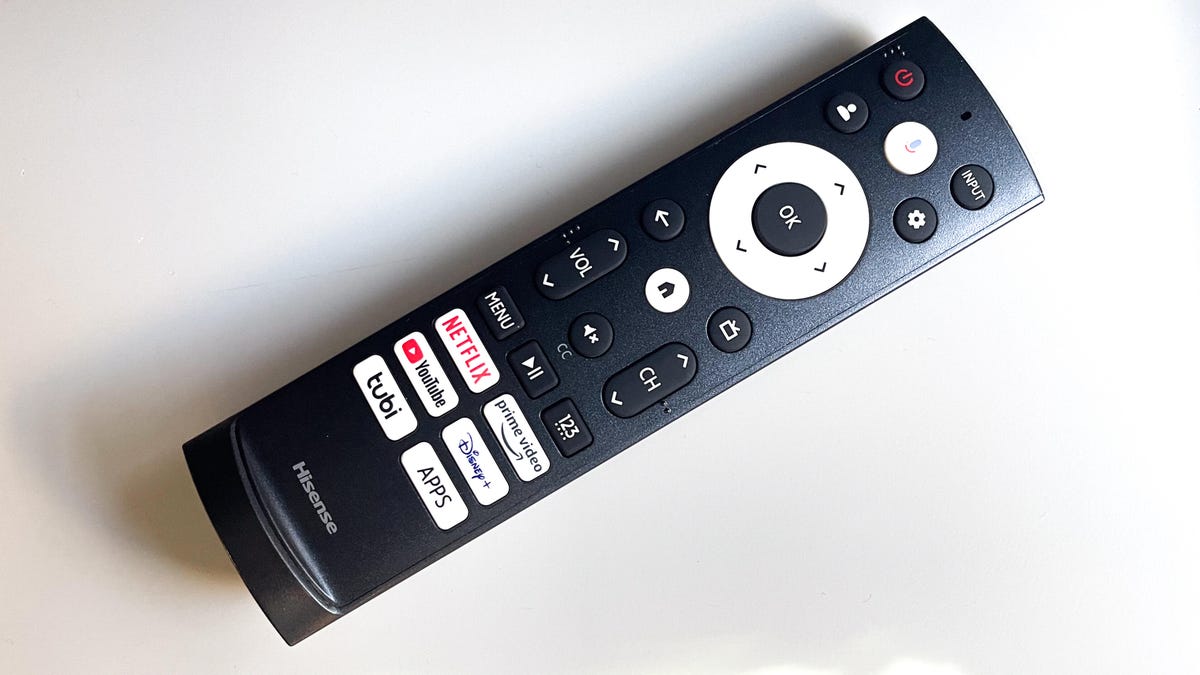
Hisense’s distant is kinda low-brow.
For what it is value I favored the design of the TCL QM8 higher, with its central pedestal stand and superior distant.
Google TV: Quick sufficient and loads of apps, extra complicated than Roku
Amongst all the good TV programs I like Google TV second-best, after Roku. Highlights embrace glorious voice outcomes due to Google Assistant, a well-implemented children profile mode and parental controls, tight integration with Google apps (particularly YouTube and YouTube TV) and extra apps general, due to the Play retailer, than proprietary programs like Samsung and LG.
The draw back? In 2023 TV makers like TCL and Hisense don’t provide one of the best picture high quality extras on their Roku TVs – they’re reserved strictly for Google TV fashions. In order for you Roku on the U8K or any Google TV you may want to connect a Roku streaming device.

Once I examined the U8K’s built-in Google TV system the responses have been fast sufficient, and a step sooner than the cheaper Hisense A6H, which we examined final yr. As typical with Google I did not love the big chunk of area on the high dedicated to promotions of exhibits and films on numerous providers. I additionally want the “proceed watching” row was higher-up quite than positioned beneath the “high picks for you” and apps rows. There have been numerous strategies throughout numerous apps however nonetheless loads of content material I did not care about. Search outcomes have been additionally worse than on the Roku, with too many YouTube movies developing. Personally I desire the simplicity of Roku menus.
Google TV’s profiles labored nicely. I used to be simply in a position to arrange a children profile, and I appreciated that acceptable apps like YouTube Children and PBS Children have been advised for me so as to add, and that Netflix robotically invoked the youngsters profile. Throughout setup I used to be additionally prompted to set display closing dates, create a profile image and extra. Google TV’s system gives higher parental controls than Roku, though Hearth TV is equally strong.
Options: Mini-LED, gaming and each different important
The massive distinction between the U8K and cheaper LCD-based TVs is its mini-LED backlight. Mini-LEDs are, because the title suggests, smaller than normal LEDs, permitting them to be grouped into extra local dimming zones. Full-array native dimming is one of the simplest ways to enhance image high quality on LCD TVs. It permits the display to dim and brighten completely different areas concurrently. Smaller areas, or extra dimming zones, imply extra exact illumination – which finally will increase contrast, an important ingredient in a great image – however they don’t seem to be the one issue.
The U8K has a real 120Hz refresh rate, which results in higher movement efficiency than 60Hz fashions. Like most TVs in its class right now, it additionally makes use of quantum dots that assist enhance colour in comparison with non-QD-equipped TVs. And naturally it helps each Dolby Imaginative and prescient and HDR10 excessive dynamic range formats. Nowadays mainly the one producer that does not is Samsung. The U8K additionally has Dolby Vision IQ, which works with an ambient mild sensor to robotically alter the image.
- 4 HDMI inputs (two with 4K/144Hz, one with eARC)
- Analog (composite) AV enter
- Two USB ports (2.0 and three.0)
- Ethernet (wired web)
- Headphone jack
- Optical digital audio output
- RF (antenna) enter with ATSC 3.0 NextGen TV
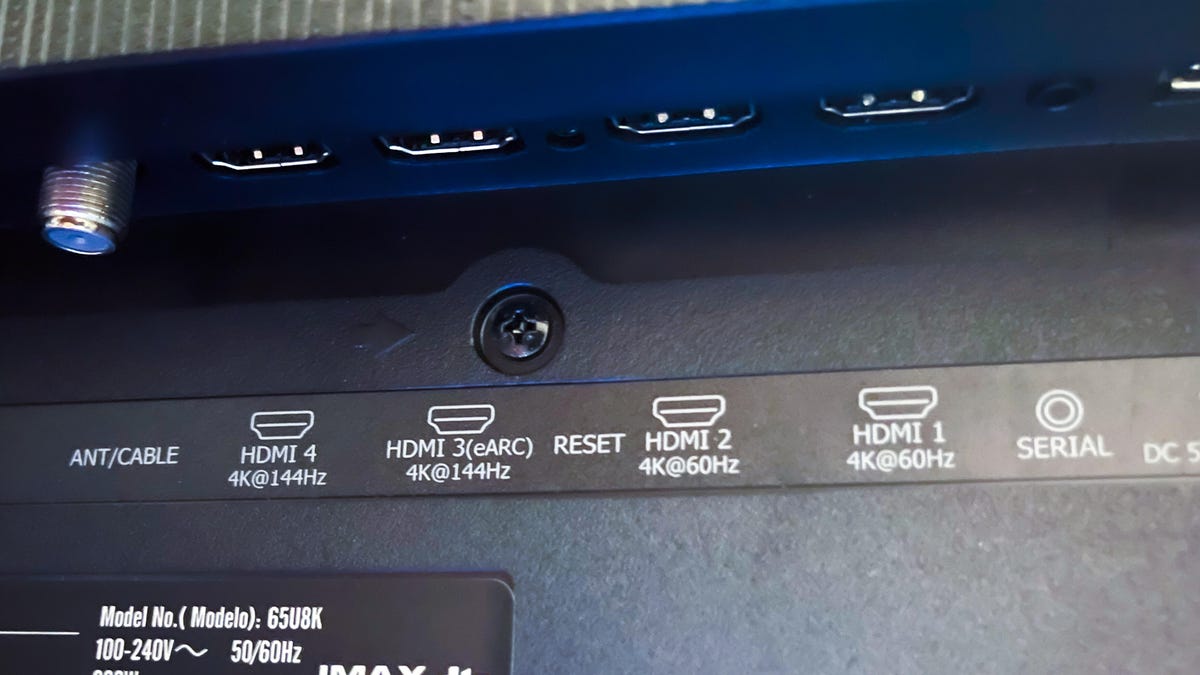
Word that this picture has been flipped 90 levels clockwise so the labels are extra legible. On the again of the TV, the inputs are organized vertically and face the aspect.
The U8K can settle for 4K/120Hz input alerts from an from an Xbox Series X or a PlayStation 5. Like many more recent TVs these inputs technically go as much as 144Hz, however that is not a giant deal in my view since because you want a PC gaming card to reap the benefits of it and certain will not present a giant increase over 120Hz enter. Different gaming extras are par for the midrange TV course, namely VRR, or variable refresh rate, and ALLM (auto game mode). One of many inputs additionally helps eARC.
The U8K’s antenna enter has a built-in ATSC 3.0 over-the-air tuner, which permits it to obtain NextGen TV broadcasts. These are nonetheless only available in a small number of markets so I did not get the prospect to take a look at this function, however it’s good to know that if the broadcasts turn out to be extra widespread, U8K homeowners will not have to attach an exterior tuner field to observe.
Hisense U8K vs. TCL QM8 and others: Image high quality in contrast
For this comparability I lined up three 65-inch TVs aspect by aspect: the Hisense UK8 and the TCL QM8, which price about the identical, and the LG OLED C3, which prices considerably extra. I did not embrace different fashions within the lineup this time however from previous opinions I can say the picture high quality of the U8K is considerably higher – brighter, with higher colour and distinction – than the Roku TV Plus Series, Amazon’s Fire TV Omni QLED and Vizio MQX (all of which price much less) and about the identical as final yr’s TCL 6-Series and Hisense U8H.
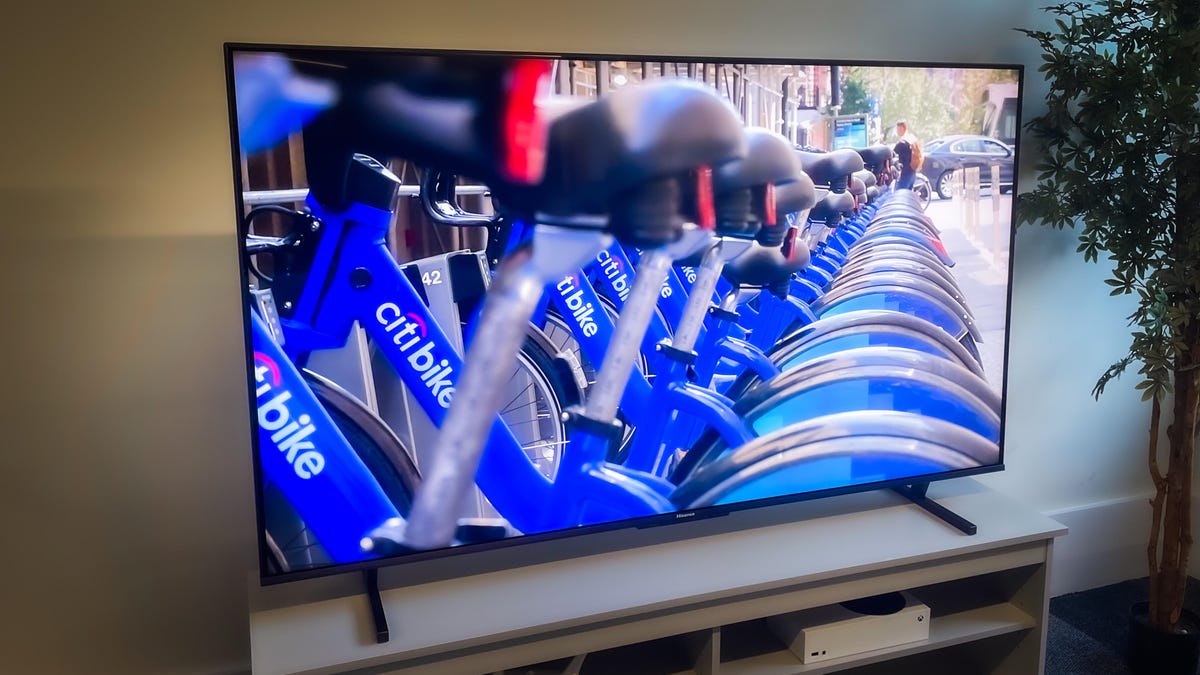
TV and films: I began my evaluations, as typical, with the demo montage from the Spears & Munsil 4K Blu-ray disc, and its nature scenes regarded glorious. The well-lit pictures of Yellowstone geysers and mountains have been shiny and good, albeit a notch much less spectacular than the brighter TCL QM8 and never fairly as contrasty because the LG OLED C3.
The troublesome black background pictures additionally regarded super, with nearly no blooming and only a contact lighter than absolutely the black I noticed on the C3. The vary of colour and brightness regarded a bit extra pure on the Hisense than on the TCL, however the latter once more confirmed a bonus in brightness.
Watching the Netflix collection Our Universe, I used to be equally impressed by the Hisense. In a collection of animations of galaxies and star fields, for instance (ep 2, 32:18), it maintained deep black ranges within the letterbox bars and enormous swaths of void higher than the TCL 6 collection, albeit not fairly in addition to the TCL QM8 or (in fact) the OLED. Highlights in a flare (33:35) have been a lot brighter than on the OLED and 6 collection, nonetheless, though once more a bit dimmer than the QM8.
And when the motion returned to the rainforest, the Hisense delivered glorious distinction and colour within the forest cover and loads of element within the fur of the chimps. As soon as extra it lagged behind the TCL QM8 in brightness and distinction however the distinction wasn’t enormous. And I did suppose the Hisense regarded a bit extra pure general than the QM8, which subjectively appeared only a bit too shiny in highlights.

A recreation bar shows important info together with variable refresh price and HDR standing.
Gaming: Hisense provides extra gaming options than on final yr’s U8H, though they don’t seem to be fairly as various as on Samsung, LG or TCL. Once I linked an Xbox Sequence X, hitting the Menu key summoned a particular gaming menu alongside the underside that signifies present gaming standing, together with real-time frames per second, HDR and different options.
In contrast to the competitors, Hisense would not embrace particular image modes for gaming, though you possibly can transfer to a different menu to toggle away from recreation mode and select others, reminiscent of “HDR Sport” or “Filmmaker.” I discovered this association complicated, particularly when the pop-up “Optimized for recreation settings” appeared in these different modes. I a lot desire to have separate discrete modes I do know are designed for gaming.
There’s a single toggle for “darkish element” that brings up shadow element, and you may tweak a particular Brightness setting to regulate it. I used to be aggravated that a number of different settings – Image Dimension, Display Place and Excessive Refresh Fee Mode – have been inactive. Don’t be concerned about that final one, nonetheless. In response to my Xbox’s menu the U8K is able to supporting each format the field can put out, together with 4K/120Hz and Dolby Imaginative and prescient. I additionally measured a strong 14ms lag in recreation mode for each SDR and HDR.
Evaluating the sport mode picture high quality between the Hisense, TCL and LG C3, the story was just like what I noticed with TV and films. The C3 regarded one of the best general after I performed Starfield, and the TCL had the brightness benefit, however the picture of the Hisense regarded a bit extra balanced to my eye, with extra pure colour, than did the TCL’s. I bumped up the native dimming setting to Excessive on the Hisense to provide it a bit extra pop, however general I most well-liked the extra dynamic image of the TCL for video games in my side-by-side comparability.
Vivid lighting: The Hisense U8K is an excellent bright-room performer, particularly for the cash. Its brightness measured only a couple nits shy of the TCL QM8 and it prices rather a lot much less, and naturally it is a lot cheaper than an equal Samsung. And it is value nothing that not like the Samsung QN90B I examined, the opposite TVs together with the U8K are in a position to preserve their “brightest mode” ranges for quite a lot of seconds.
Mild output in nits
| TV | Brightest mode (HDR) | Correct mode (HDR) | Brightest mode (SDR) | Correct mode (SDR) |
|---|---|---|---|---|
| Samsung QN65Q90B | 3,316 | 1,981 | 2,625 | 974 |
| TCL 65QM850G | 1,975 | 1,975 | 1,739 | 1,448 |
| Hisense 65U8K | 1,966 | 1,966 | 1,720 | 1,240 |
| TCL 65R655 | 1,387 | 1,194 | 1,292 | 624 |
| LG OLED65C3 | 861 | 817 | 501 | 464 |
| Vizio M65QXM-K03 | 939 | 742 | 958 | 608 |
| Roku TV Plus | 514 | 455 | 579 | 404 |
In HDR the brightest mode (Imax) was additionally probably the most correct, which is a bonus over many TVs whose brightest modes have horrible colour. In SDR, nonetheless, the U8K’s brightest mode is Vivid (which, sure, has horrible colour) so for shiny room viewing I would recommend utilizing Theater Day as an alternative. It is nonetheless fairly shiny, as famous within the chart above beneath “correct” however not fairly as searing as Vivid. That mentioned, it is well worth the tradeoff in brightness to get higher colour, in my view.
The TV’s display end did a advantageous job dealing with reflections, about in addition to the TCL QM8, however it did not protect darkish areas in addition to the C3 OLED.
Hisense U8K settings and movie mode notes
Very similar to the Hisense U8H I examined final yr, on the U8K the three most correct image modes for HDR – HDR Theater, Filmmaker and IMAX modes – have been basically the identical when it comes to colour and grayscale. I once more ended up selecting Imax as a result of the opposite two required tweaks to the default settings to look their finest. Filmmaker engages the ambient mild sensor by default, and HDR Theater does the identical for the Cleaning soap Opera Impact, and in each circumstances I would typically wish to disable these “options.”
In SDR mode it was (identical to final yr) between Theater Night time and Filmmaker, which each require comparable tweaks. Filmmaker with the sunshine sensor disabled was too shiny, and fewer correct than Theater Night time, so I went with the latter for the SDR Geek Field measurements beneath. Once more it engages movement smoothing by default, nonetheless, so I like to recommend turning it off (Image > Superior Settings > Movement Enhancement > Off). For my part that setting must be disabled from the beginning, as it’s with one of the best image modes of Hisense’s rivals.
Word that I additionally modified the gamma management (to my goal 2.2 as an alternative of the default BT.1886) in order that tweak is mirrored within the numbers beneath. I would additionally suggest doing so for shiny room viewing (Theater Day).
Geek field
| Check | Consequence | Rating |
|---|---|---|
| Black luminance (0%) | 0.020 | Good |
| Peak white luminance (SDR) | 1720 | Good |
| Avg. gamma (10-100%) | 2.27 | Good |
| Avg. grayscale error (10-100%) | 1.64 | Good |
| Darkish grey error (30%) | 1.24 | Good |
| Vivid grey error (80%) | 2.13 | Good |
| Avg. colour checker error | 1.55 | Good |
| Avg. saturation sweeps error | 1.56 | Good |
| Avg. colour error | 2.33 | Good |
| 1080p/24 Cadence (IAL) | Cross | Good |
| Enter lag (Sport mode) | 14.07 | Good |
| HDR10 | ||
| Black luminance (0%) | 0.004 | Good |
| Peak white luminance (10% win) | 1966 | Good |
| Gamut % UHDA/P3 (CIE 1976) | 97.37 | Good |
| ColorMatch HDR error | 1.90 | Good |
| Avg. colour checker error | 1.02 | Good |
| Enter lag (Sport mode, 4K HDR) | 14.37 | Good |
Try how we test TVs for extra particulars on the Geek field and our TV testing methodology.
Portrait Displays Calman calibration software program was used on this assessment.
[ad_2]